


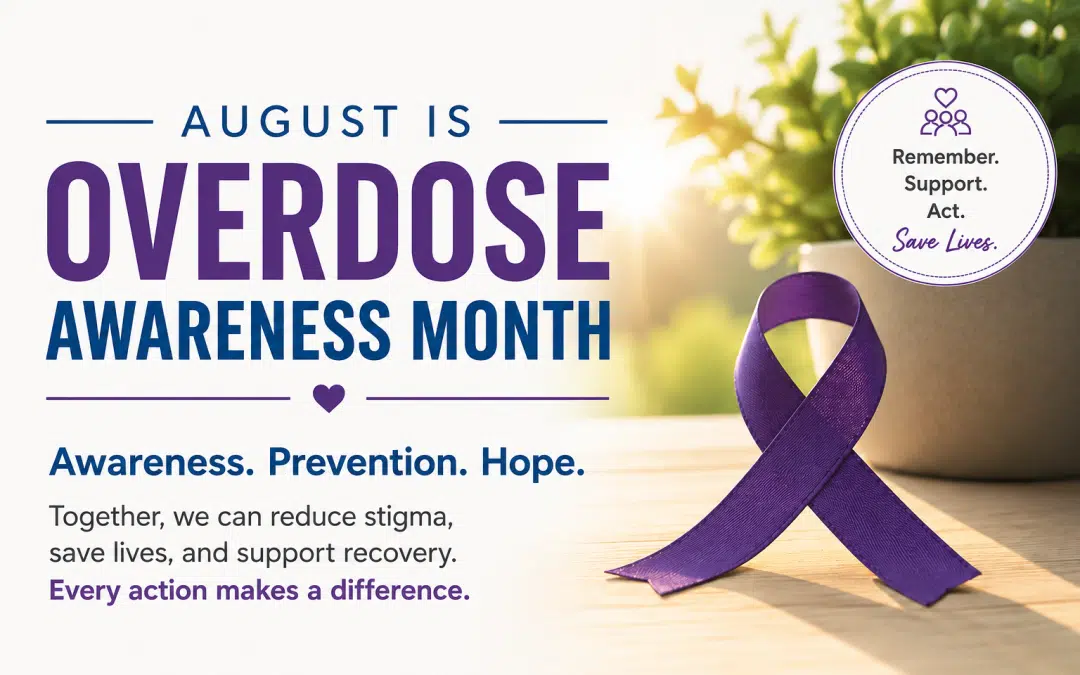
August brings renewed attention to overdose prevention, culminating in International Overdose Awareness Day on August 31. For substance use disorder counselors and treatment professionals, the month is an opportunity to reinforce education, reduce stigma, recognize overdose risk, and connect clients and families with proven tools that can save lives.
Each August, communities across the country focus attention on the lives affected by drug overdose and on the steps that can prevent future deaths. International Overdose Awareness Day is recognized on August 31, and SAMHSA describes it as a global annual campaign to end overdose, remember those who have died, support families and friends, and renew efforts to prevent overdose deaths.
Recent national data provide an encouraging sign while also showing why continued prevention efforts matter. CDC provisional data released in 2025 estimated 77,648 drug overdose deaths during the 12 months ending in March 2025, representing an approximately 25% decrease compared with the same period one year earlier. Despite that decline, the continuing number of overdose deaths underscores the importance of treatment access, prevention education, and rapid response when an overdose occurs.
For SUD professionals, overdose prevention is closely connected to everyday counseling and treatment work. CDC identifies treatment for opioid use disorder, expanded access to substance use disorder treatment, early intervention for people at highest risk, overdose prevention education, and broader access to naloxone as important strategies for reducing overdose deaths. These approaches provide counselors with opportunities to help clients understand risk, prepare for emergencies, connect with appropriate treatment, and involve supportive family members or peers when appropriate.
Naloxone remains one of the most important tools in opioid overdose prevention. CDC describes naloxone as a safe, life-saving medication that can reverse an overdose involving opioids, including fentanyl and heroin, when administered in time. More than 1.5 million naloxone prescriptions were dispensed from U.S. retail pharmacies in 2024, showing that access has expanded substantially, although availability still varies across the country.
Recognizing the signs of an opioid overdose is equally important. CDC identifies warning signs that can include being unconscious or unable to wake up, slow or shallow breathing, choking or gurgling sounds, discoloration of the lips or nails, and very small “pinpoint” pupils. When an opioid overdose is suspected, CDC recommends administering naloxone and seeking emergency medical assistance.
For counselors and SUD programs, Overdose Awareness Month can be more than an observance. It can be a reminder that conversations about overdose risk, naloxone, treatment engagement, relapse risk, and emergency planning are meaningful parts of supporting clients and families. The continued decline in overdose deaths is encouraging, but sustaining that progress requires ongoing education, access to evidence-based treatment, and communities prepared to respond when someone is at risk. This concluding point is an inference based on CDC and SAMHSA prevention guidance.
References:
Substance Abuse and Mental Health Services Administration (SAMHSA) — International Overdose Awareness Day / Overdose Awareness Week
Centers for Disease Control and Prevention (CDC) — National Fentanyl Prevention and Awareness Day Toolkit
Centers for Disease Control and Prevention (CDC) — Preventing Opioid Overdose
Centers for Disease Control and Prevention (CDC) — Lifesaving Naloxone
Centers for Disease Control and Prevention (CDC) — 5 Things to Know About Naloxone
Centers for Disease Control and Prevention (CDC) — Naloxone Dispensing Rate Maps
Drug Enforcement Administration (DEA) — International Overdose Awareness Day


